
1. Applications
- Milk quality screening: Detect visible extraneous matter in raw milk
- Hygiene assessment: Check farm and handling cleanliness
- Dairy intake control: Screen milk before processing or payment
- Compliance monitoring: Support sediment-related dairy quality guidelines
- Training & labs: Educational demonstration of milk contamination testing
The sediment test is a standard practice in dairy quality control to help ensure milk meets acceptable cleanliness criteria before further processing.
2. Compliance Standard
While there’s no formal product certification standard specifically for the sediment tester itself, the milk sediment test procedure generally aligns with established dairy industry quality control practices (e.g., USDA/AOAC or ISI milk grading methods), where sediment amounts are compared to reference values to classify milk cleanliness. Typical sediment test methods are described in dairy quality guidelines and reference documents.
3. Product Description
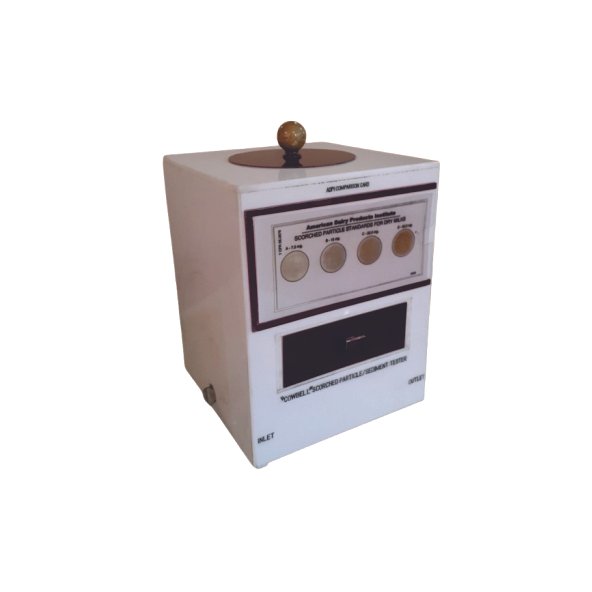
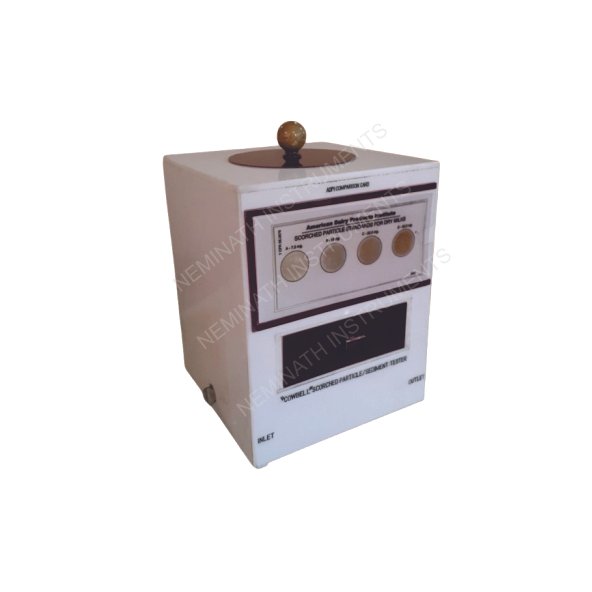
The Cowbell Sediment Tester is a manual laboratory/field instrument designed to assess the cleanliness of raw milk by detecting and collecting insoluble foreign matter (sediment) such as dust, dirt, hair, or other particulates. The device uses a removable sediment disc/filter to trap solids as milk is drawn through the tester, allowing visual grading or quantitative comparison against standard charts. It’s widely used in dairy reception, quality control labs, milk collection centres, and farm inspections.
4. Technical Specifications
|
Feature |
Typical Value / Description |
|
Model |
Cowbell Sediment Tester |
|
Material |
Stainless Steel body (durable) |
|
Operation Type |
Manual aspiration via vacuum/hand suction |
|
Sediment Disc Size |
Standard (fits typical filter pads/discs) |
|
Sample Volume |
~0.5–1 Litre (depends on test procedure) |
|
Attachment |
Interchangeable bushings for disc placement |
|
Application |
Raw milk sediment testing |
|
Use Environment |
Lab/field dairy quality check |
|
Pack Type |
Box packaging |
5. Apparatus Supplied
- Standard package typically includes:
- Cowbell Sediment Tester unit (body with plunger/vacuum attachment)
- Interchangeable bushing for holding sediment disc/filter
- Instruction manual (use guidelines)
6. Optional Accessories
- Sediment discs/filters (cotton/lintine pads)
- Vacuum pump or aspirator setup (if more efficient suction is needed)
- Reference sediment comparison charts (e.g., standardized grading)
- Additional bushings or holders (for different disc sizes)
7. Common Capacities Available
Since this is a manual tester, the main “capacity” factor is sample volume handled per test — typically in the range of ~0.5 L to 1 L per sediment evaluation procedure, depending on the test protocol used.
8. Dimensions and Weight (Approx)
|
Parameter |
Approximate Value |
|
Length |
~30–40 cm (approx.) |
|
Width |
~5–10 cm (approx.) |
|
Height |
~10–15 cm (approx.) |
|
Weight (net) |
~0.5–1.2 kg (approx., stainless steel) |
|
Packing Size |
Box (varies by seller) |
9. How It Works (Overview)
- Insert Sediment Disc: Place a clean sediment disc in the slot or holder on the tester.
- Sample Immersion: Dip the tester to the bottom of the milk container.
- Draw Milk: Use the plunger or vacuum aspirator to draw a measured volume of milk through the disc.
- Remove & Inspect: Take out the disc and visually assess the trapped sediment — compare it with reference standards or charts to classify cleanliness.