
1. Application:
The California Mastitis Test (CMT) is a rapid, cow-side diagnostic tool used to detect subclinical and clinical mastitis in dairy animals (e.g., cow, buffalo, goat) by estimating the somatic cell count (SCC) in milk. It is widely used by dairy farmers, veterinarians, and quality control technicians to screen individual udder quarters and assess udder health at the time of milking.
2. Compliance Standard :
While most CMT kits are not regulated medical devices, their use in mastitis screening aligns with standard veterinary and dairy practices. The method matches recommendations and protocols described in veterinary manuals and dairy quality guidelines for somatic cell testing. Internationally, CMT procedures are referenced in dairy science and mastitis management literature.
3. Product Description
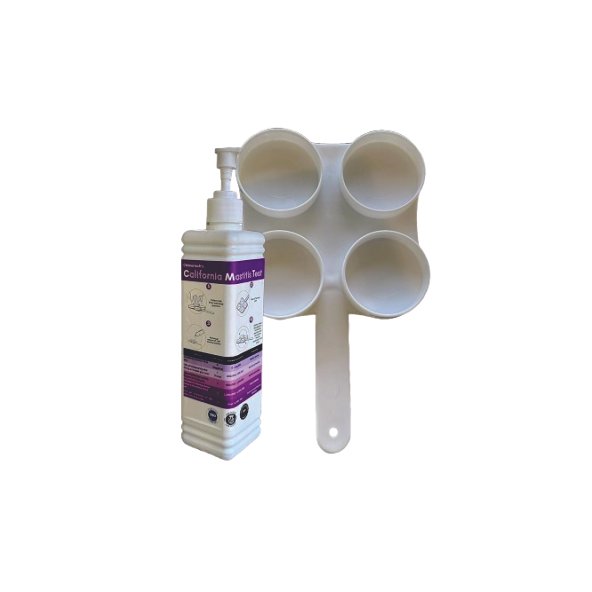
The Weizur CMT kit reagent (“Weizur Test”) contains a pH indicator and surfactant reagent that reacts with somatic cells (white blood cells) in milk. When mixed with milk samples in the specially designed CMT paddle, the reagent interacts with DNA released from lysed cells, creating a gel formation whose thickness corresponds to the degree of mastitis-related inflammation.
4. Technical Specifications
|
Feature |
Specification / Notes |
|
Test Type |
California Mastitis Test (Qualitative SCC indicator) |
|
Reagent Composition |
Anionic surfactants + pH indicator (e.g., bromocresol purple) in aqueous solution |
|
Reagent Form |
Liquid concentrate |
|
Color of Reagent |
Reddish / purple indicator |
|
Sample Volume |
~2 mL milk + ~2 mL reagent per cup (typical) |
|
Reaction Principle |
Cell lysis → DNA binding → gel formation proportional to somatic cell content |
|
Result Interpretation |
Visual gel intensity scoring (0 = normal, +, ++, +++) |
|
Storage Temp |
~15–30 °C recommended (for Weizur reagent) |
|
Shelf Life |
~24 months from manufacture (varies by batch) |
5. Apparatus Is Supplied
A complete typical CMT kit usually includes:
- CMT reagent bottle (e.g., 500 mL) — ready for use
- CMT testing paddle with 4 cup cavities
- Reagent dispensing pump/bottle or dropper
- Instruction manual / interpretation chart
6. Optional Accessories
- Reagent concentrate refill bottles (for continued testing)
- Extra CMT paddles (replacement or spare)
- Dispensing bottles / squeeze dispensers
- Instruction and record sheets for tracking herd testing results
- Protective gloves and field kit case
7. Common Capacities Available
CMT kits are typically differentiated by volume of reagent and number of tests they can perform:
|
Kit Reagent Volume |
Typical No. of Tests |
|
~250 mL |
~125–150 tests (approx.) |
|
~500 mL |
~250–300 tests (approx.) |
|
~1 L |
~500–600 tests (approx.) |
8. Dimensions & Weight (Approximate)
|
Component |
Approximate Size / Mass |
|
Reagent Bottle (500 mL) |
~15–20 cm tall; ~0.5 kg |
|
CMT Paddle |
~15–20 cm × ~10 cm × ~2 cm |
|
Kit Packed (Box) |
~20 cm × 15 cm × 10 cm; ~1–1.2 kg |